
An Epic Reimaged Through Fashion: The Vault’s Odyssey Meets Christopher Nolan’s
Written by Molly Bloomfield
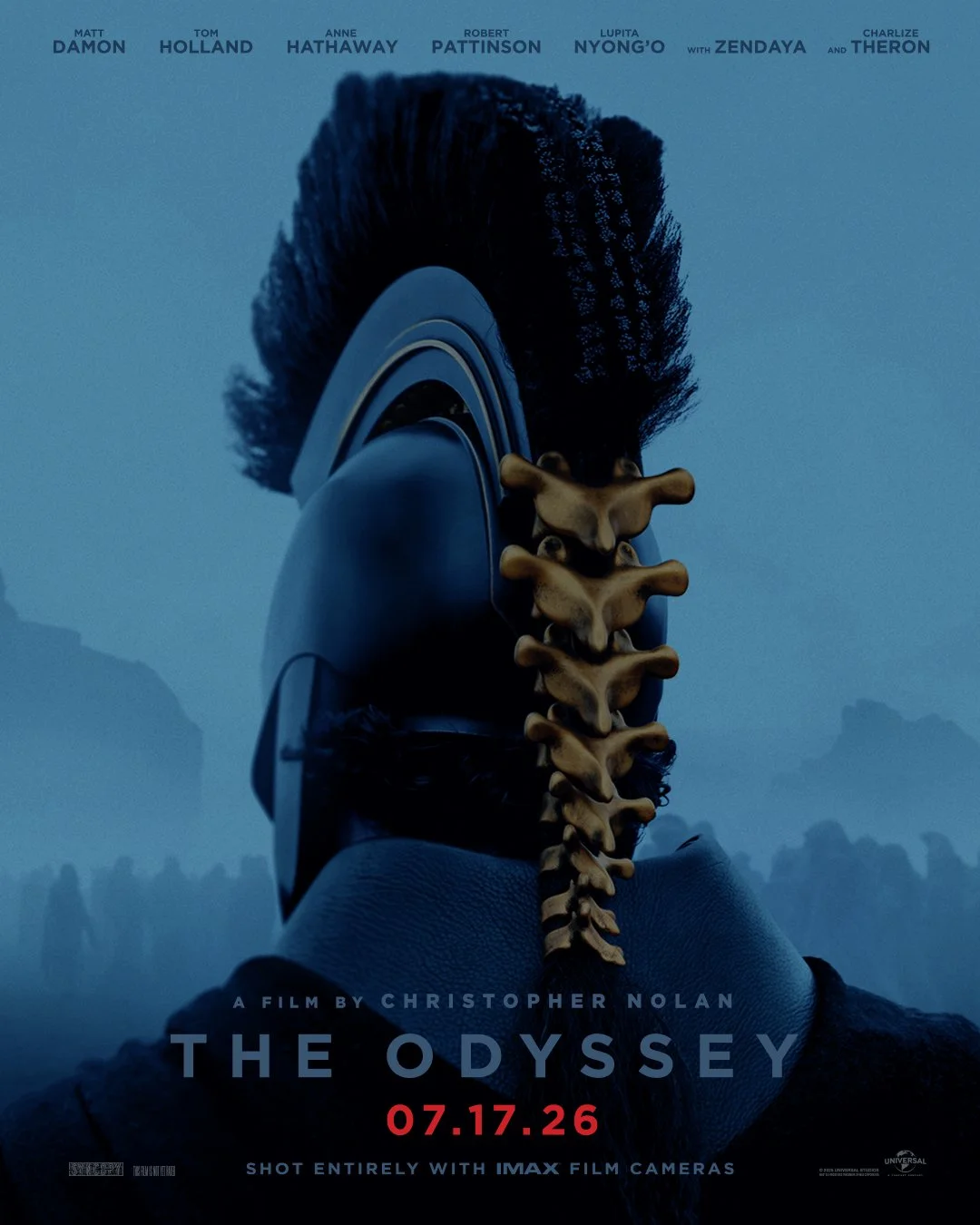
Theatrical poster for Christopher Nolan's The Odyssey
Over the last few weeks, audiences across the world have sat down to watch Christopher Nolan’s highly anticipated and most recent film, The Odyssey. With a star studded cast and a smashing box office debut of $264.1 million, Nolan is making the classic Greek epic poem that’s thousands of years old mainstream again. But here at the Vault, we know the importance of The Odyssey. May 2nd, 2023, The Vault put on its first full fashion show, centered around The Odyssey and including pieces directly inspired by the tale. Both the Vault and Nolan made different choices in styling, creating unique interpretations of the classic characters through fashion.
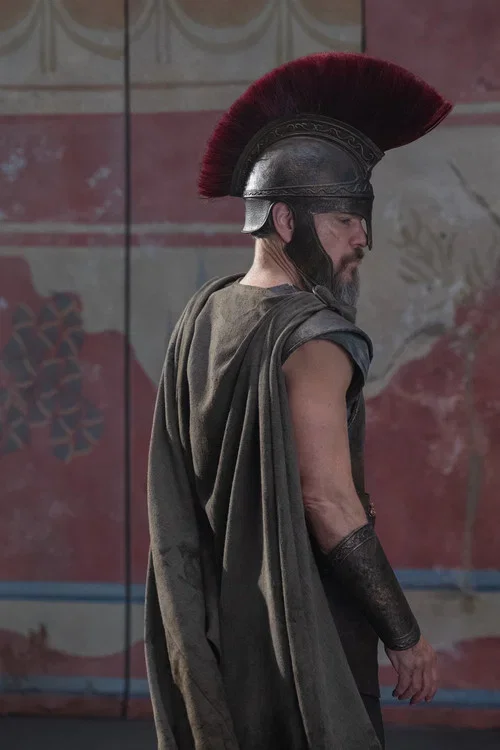
Nolan’s adaptation of the Odyssey has already come under fire for historically inaccurate costuming, but this was to be expected. Ellen Mirojnick, the movie’s costume designer, made this clear when she shared with Vogue that “we were not after a historical period…we were after a timeless period.” In creating Odysseus’ outfit, the film aimed to demonstrate Odysseus’ fractured and frayed world, choosing to use bronze and leather to outfit actor Matt Damon. Damon’s armor references back to the Bronze Age, but goes beyond accuracy to convey the brutality of Odysseus’ journey.
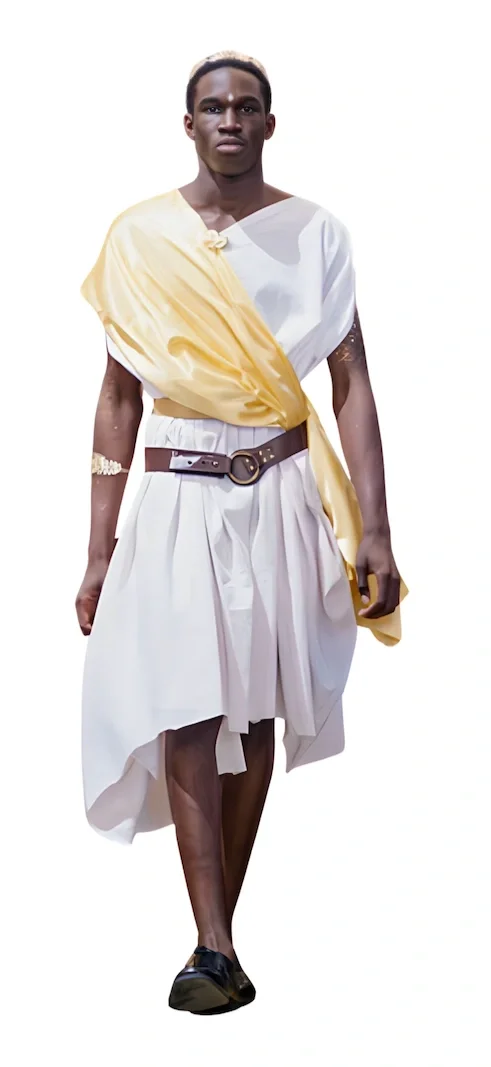
For the Vault’s fashion show, designers chose to utilize cotton to recreate an Ancient Greek chiton, elevating Greek culture instead of focusing on armor. The gold sash represented Odysseus’ status as king, and the chiton/toga helped to convey traditional values of Ancient Greece such as arete (excellence) and hubris (pride). Both of the outfits, from the film and the fashion show, work to tell viewers more about Odysseus and share elements of his story.
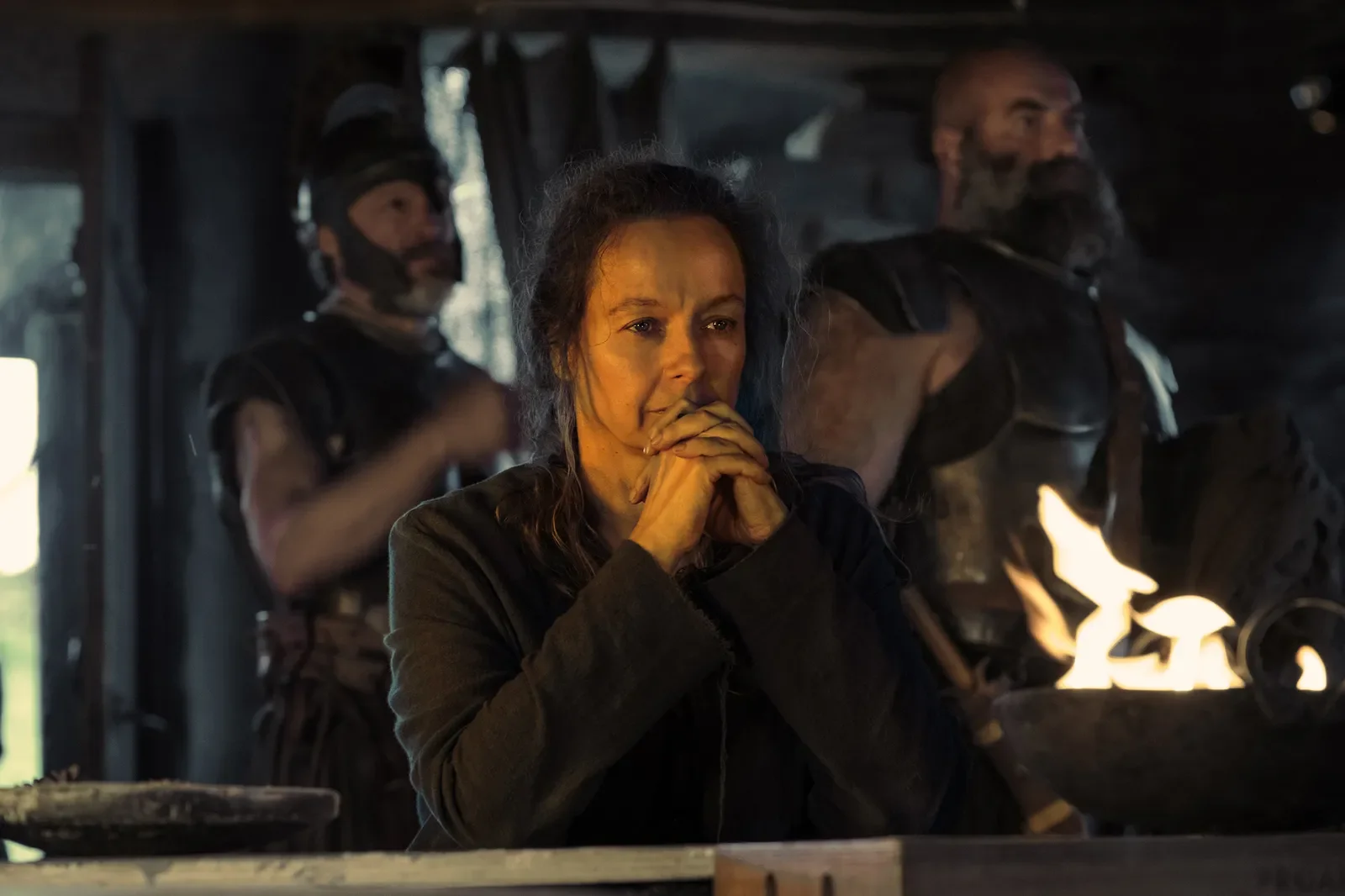
Circe is a pivotal figure in the Greek epic, a witch who keeps Odysseus and his crew on her island for a full year, turning them into pigs with her magic. Depictions of Circe vary across all retellings, and her character is extremely complex and morally grey. The Vault’s interpretation is more accurate to the original text, where Circe is “described as a beautiful, enchanting woman singing and weaving at a loom.” Embracing this version, the Vault styled Circe with white flowy linen and ornate jewelry.
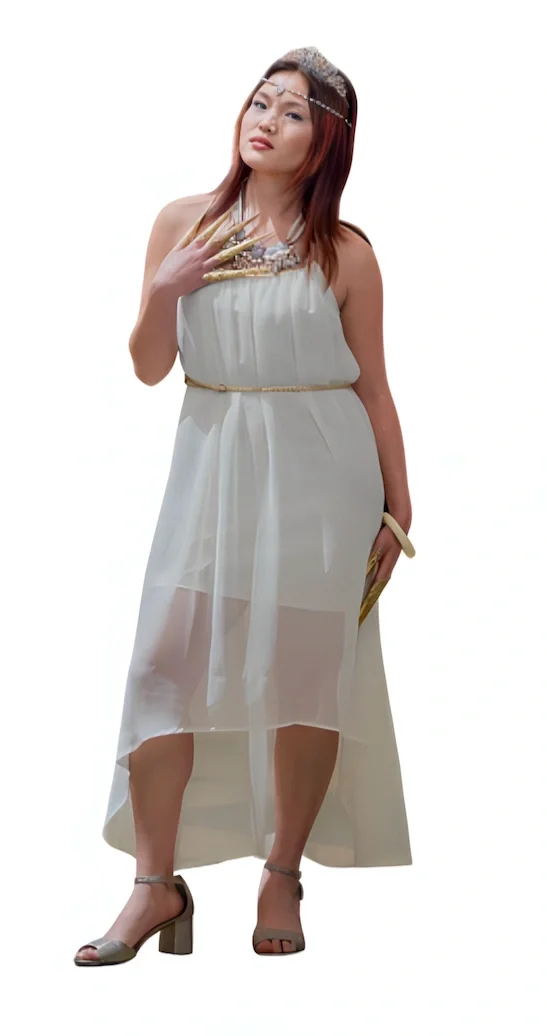
Contrarily, Nolan’s retelling leans more into Circe’s witchy side. Her character wears dark clothes, depicted as “cruel and crazed.” Perhaps the largest distinction in portrayals, Circe has been depicted differently across time due to differences in politics and perspectives of feminism, as shown in the Vault’s and Nolan’s versions.

Calypso is another strong female character that Odysseus must beguile in order to complete his journey home. She acts as a temptress who keeps Odyssey captive for seven years, falling in love with him and promising him immortality. Nolan’s interpretation of Calypso has come under fire for its simplicity, a fish net draped across her body with a “weather- and water-worn dress” underneath. However, her outfit reflects the limited resources available on her island for clothing.
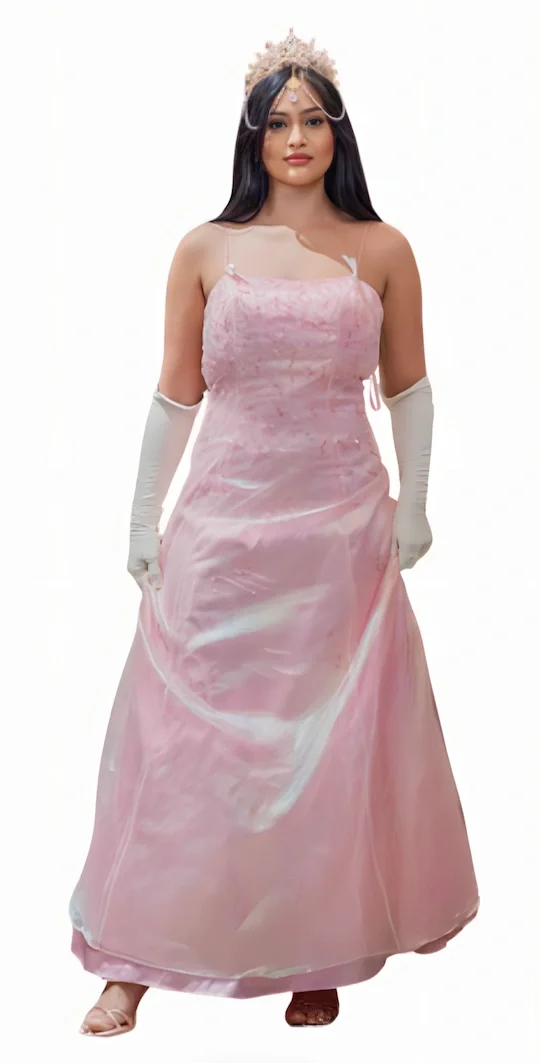
Nevertheless, the Vault took a different route with this character, leaning more into Calypso’s femininity. A pink dress with delicate details, satin gloves, and a detailed crown make up the Vault’s interpretation. There lies a stark difference between the two designs, each highlighting different aspects of Calypso’s character.
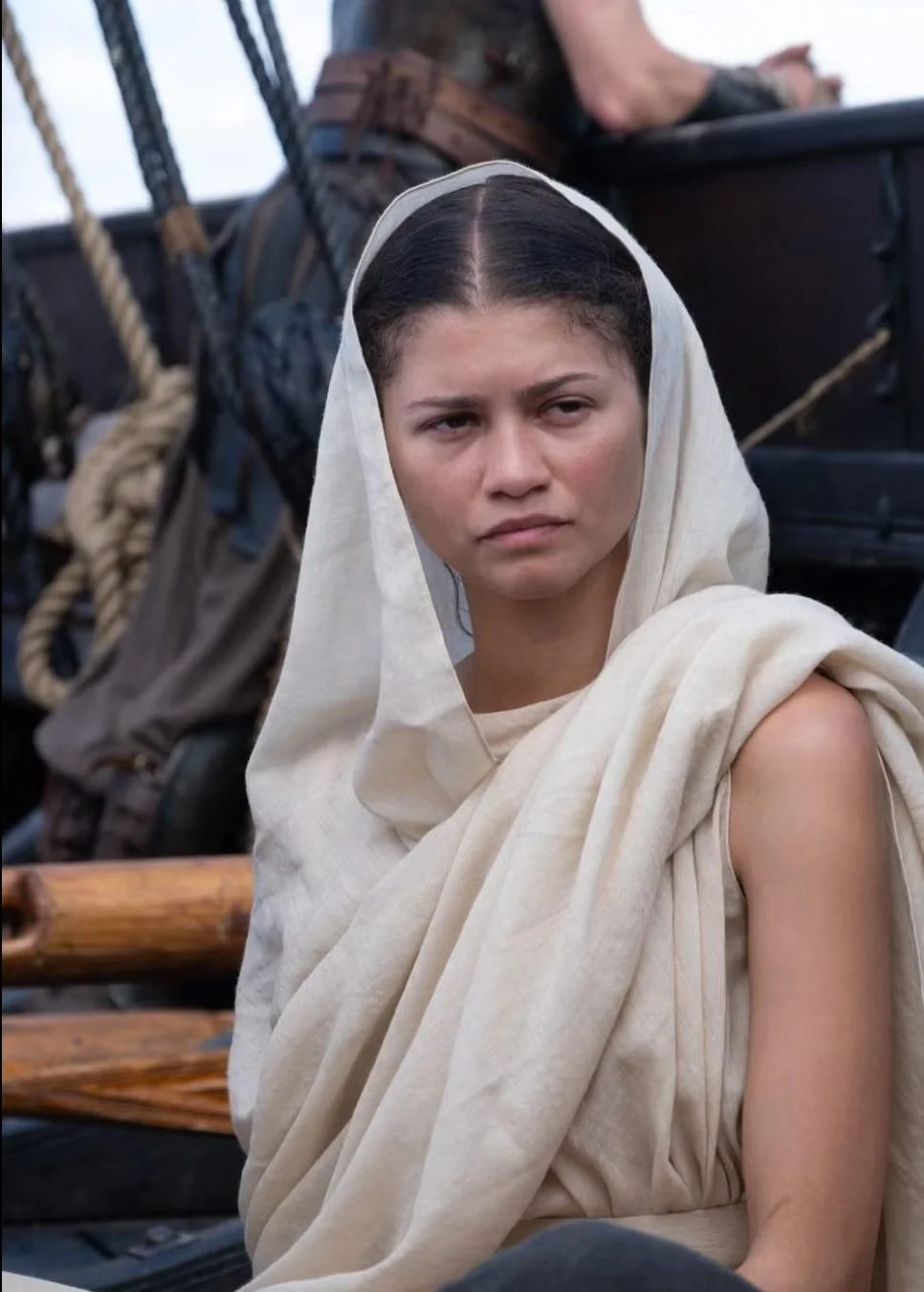
Throughout the Odyssey, Athena serves as Odysseus’ divine protector and champion. In both the Vault and Nolan’s designs, this is conveyed through the use of white fabric to reflect Athena’s authority and holiness. However, the 2026 movie focused more on a look of “simplicity and restraint,” utilizing linens to give Zendaya’s Athena strong and commanding presence.

Contarily, the Vault’s Athena incorporates more aspects of her role as a Greek goddess. Intricate lace details and a beautiful golden headpiece affirm Athena’s role on Mt. Olympus.
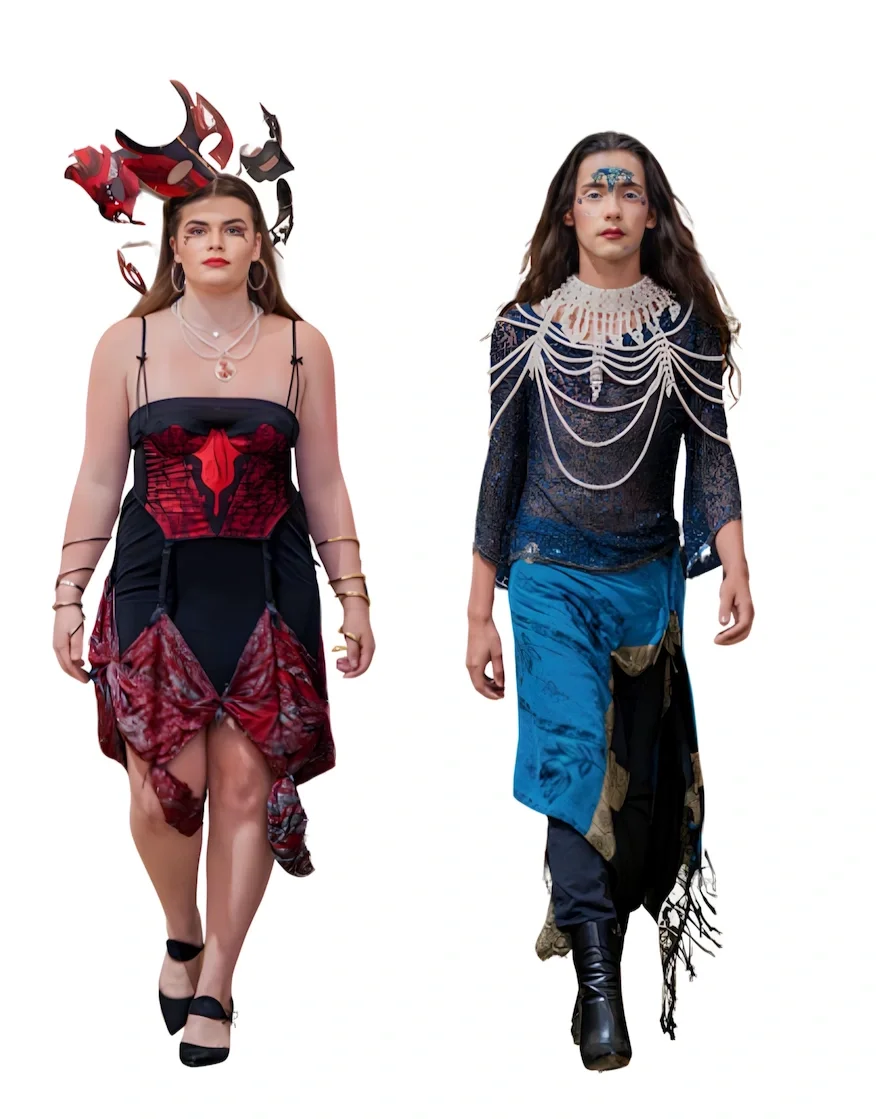
Scylla and Charybdis are some of the most feared monsters on the Aegean, posing a serious threat to Odysseus and his crew as they must sail past the monster’s guarded strait. In the epic, Scylla is described as a 6 headed sea monster, and Charybdis as a ship-swallowing whirlpool. The Vault’s interpretation of Scylla leaned heavily into the colors red and black to invoke the terrors of Scylla, and the Scylla model wore a “halo of eye masks to represent the monster’s many heads.”

For Nolan’s Scylla, a more terrifying and uncanny creature was created, with 6 heads and a crustacean-based design. The design is less abstract and aims to create fear in the film’s viewers.
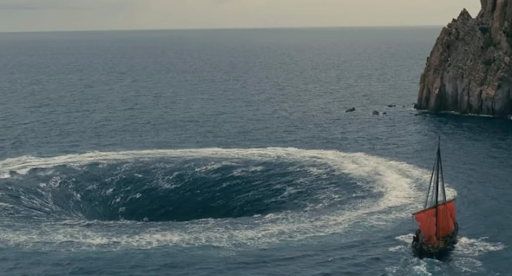
The Vault’s Chardybis leaned into nautical themes, using scales, ropes and the colors black and blue to show the whirlpool’s eerie essence. Nolan’s Charybdis was a bit more straightforward, a simple gaping hole in the sea designed to suck up ships. Both designs are hauntingly beautiful, but differ in execution.
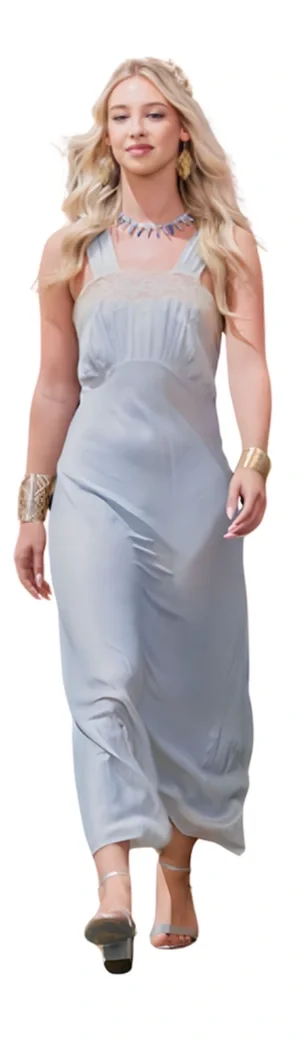
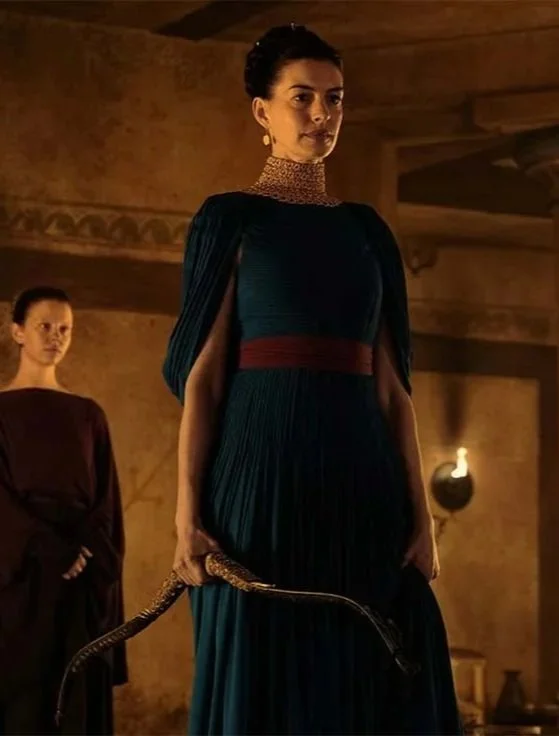
As matriarch of Odysseus’ family and queen of Ithaca, Penelope is a powerful component of the epic and Odysseus’ main motivator in returning home. Her presence is one of strength as she fends off suitors and protects her family and land while Odysseus is away. Her stability is demonstrated in Nolan’s 2026 film, where she is outfitted in deep blue, the palace colors of Ithaca and wears a strong bun in her hair. Penelope’s outfit throughout the film remains more or less the same, only using “subtle shifts of the silhouette” to represent how her character remains fixed in place. Her unchanging outfit represents her preservation of her kingdom.
In the Vault’s interpretation of Penelope, the palace colors of blue are also utilized. A softer shade is chosen, perhaps to enhance her femininity. The Vault’s Penelope wears gold statement jewelry and a crown headpiece, demonstrating her royal status.
As one of the oldest surviving works of literature of our world, the Odyssey is a tale that’s been reinterpreted and retold many times. Throughout history, fashion and stylistic choices have helped determine the aesthetics and interpretations of the famous epic. Nolan’s and the Vault’s interpretations are no different.