
BECOMING Designer Spotlight: Lucy Horrigan
Written by Molly Bloomfield
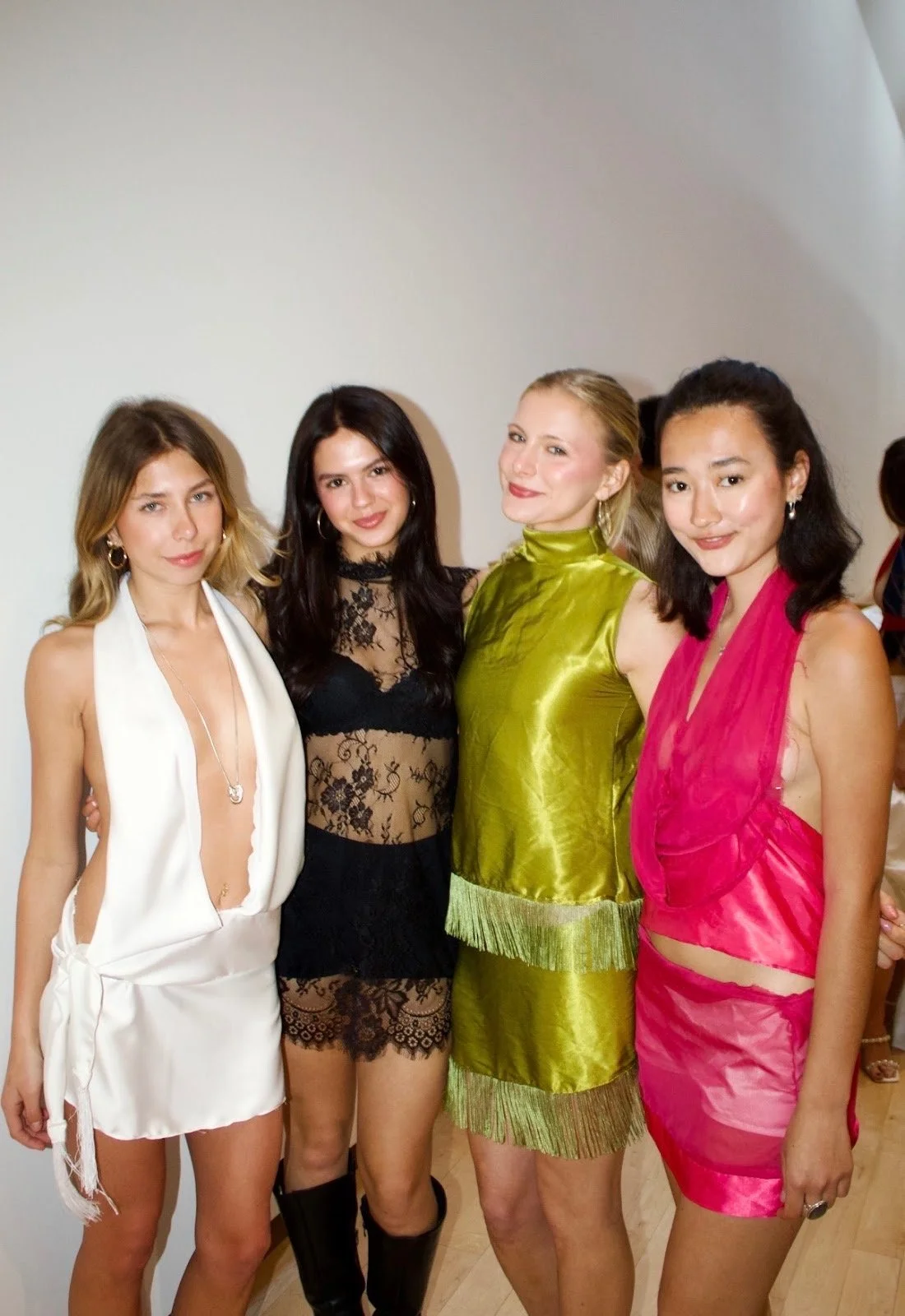
Lucy Horrigan is no stranger to designing for The Vault. Last semester, she was a crucial aspect of DEFINITIVE by creating the six looks for each of the six sisters, some of the main characters of the FW25 show. Being such a huge part of DEFINITIVE was a stressful task for Horrigan, but she thrived under pressure and now has “much more creative freedom for Becoming.” Utilizing the same models but with a new creative process, Horrigan was a key designer for the show.
Becoming is The Vault’s S26 Fashion show, held Saturday, April 18 at the Madison Museum of Contemporary Art, and explored themes of childhood, youth, pressure, transformation, and growth. Horrigan’s role for this show has evolved, and through her greater freedom, her own journey as a designer reflects the storyline of Becoming.
Horrigan designed three primary pieces for each stage of Becoming, “Play,” “Pressure,” and finally, “Becoming,” as well as an additional fourth piece for “Becoming.” Throughout these main pieces, she looks to demonstrate a storyline of how an individual goes from childhood whimsy, to the pressures of growing up, and then into becoming their true self.
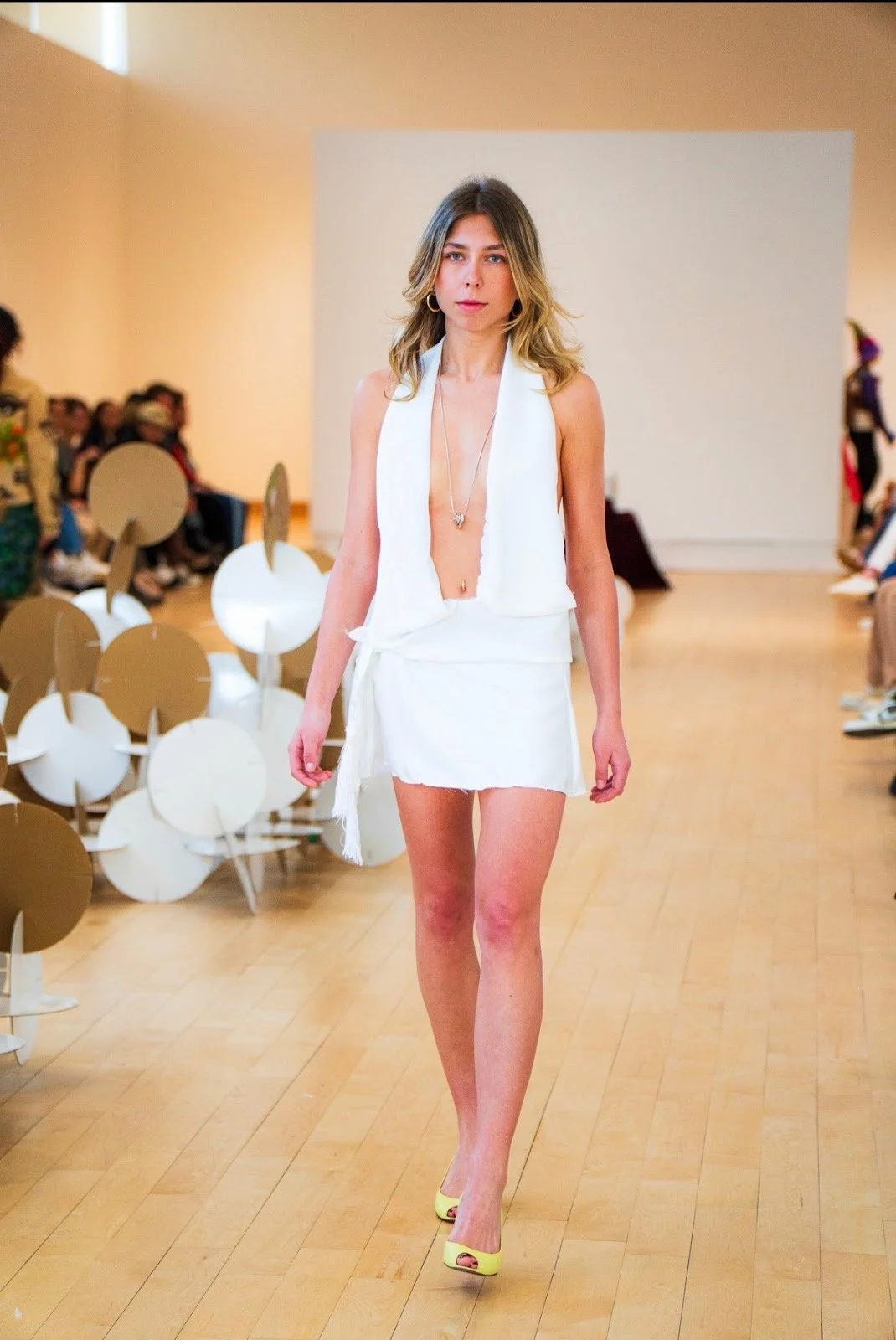
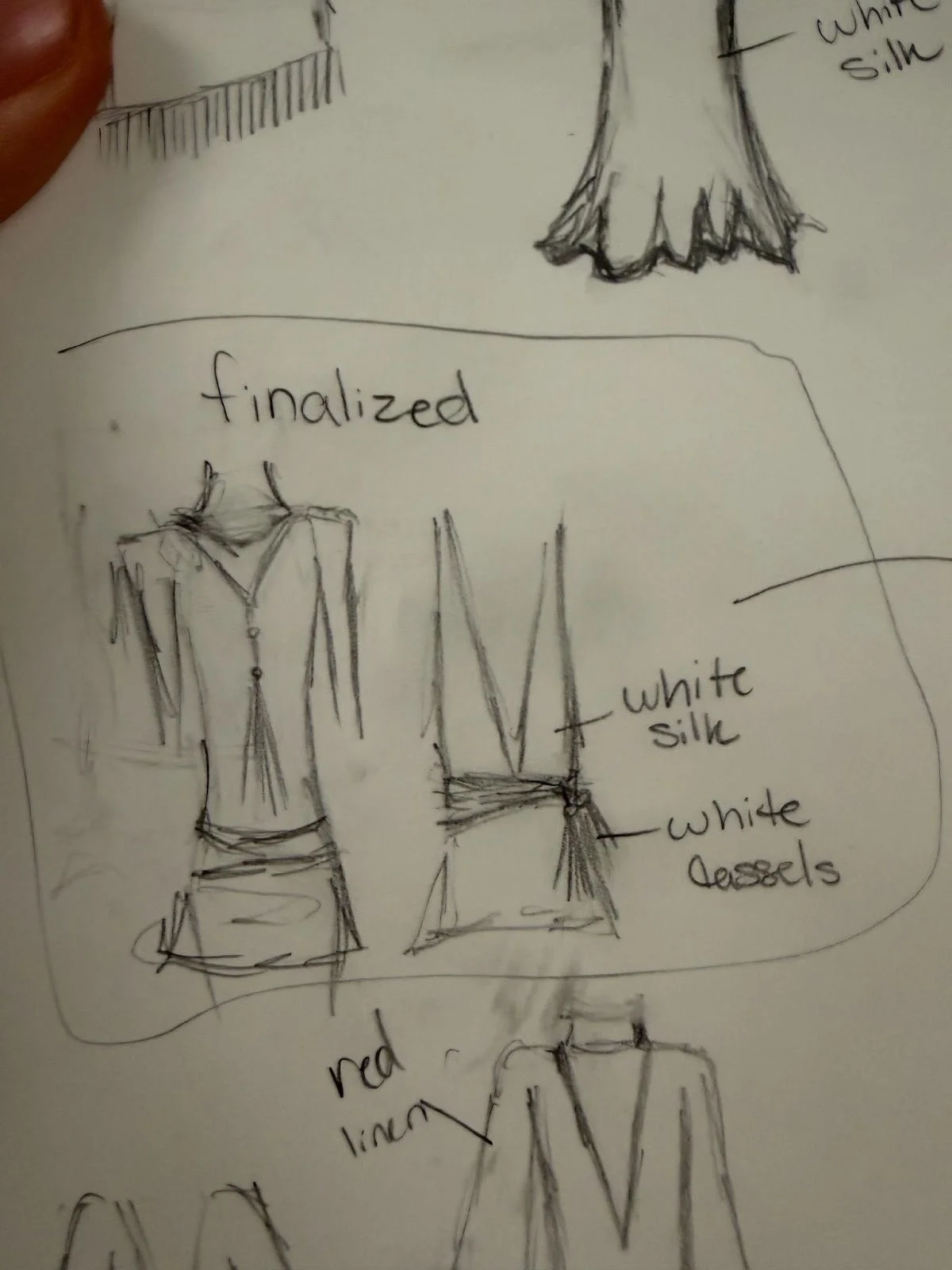
Her first piece for “Play” is a white silk dress with a halter top and a tassel on the side. For Horrigan, the dress fits in with the more “fun, loose, and playful” sides of childhood. The white color symbolizes youthfulness and innocence that is often associated with being young. “The dress is definitely less structured and more flowy”, Horrigan says, and that is partly to represent the carefree and curious nature of childhood.
Horrigan decided on this design, as she does with all of hers, through doodling, either during class or during her free time. “I design through trial and error,” Horrigan shares, and her notebook is proof of this, filled with hundreds of possible designs scribbled next to class notes. Through doodling and sketching, Horrigan is able to be her most creative self and create her most authentic work.
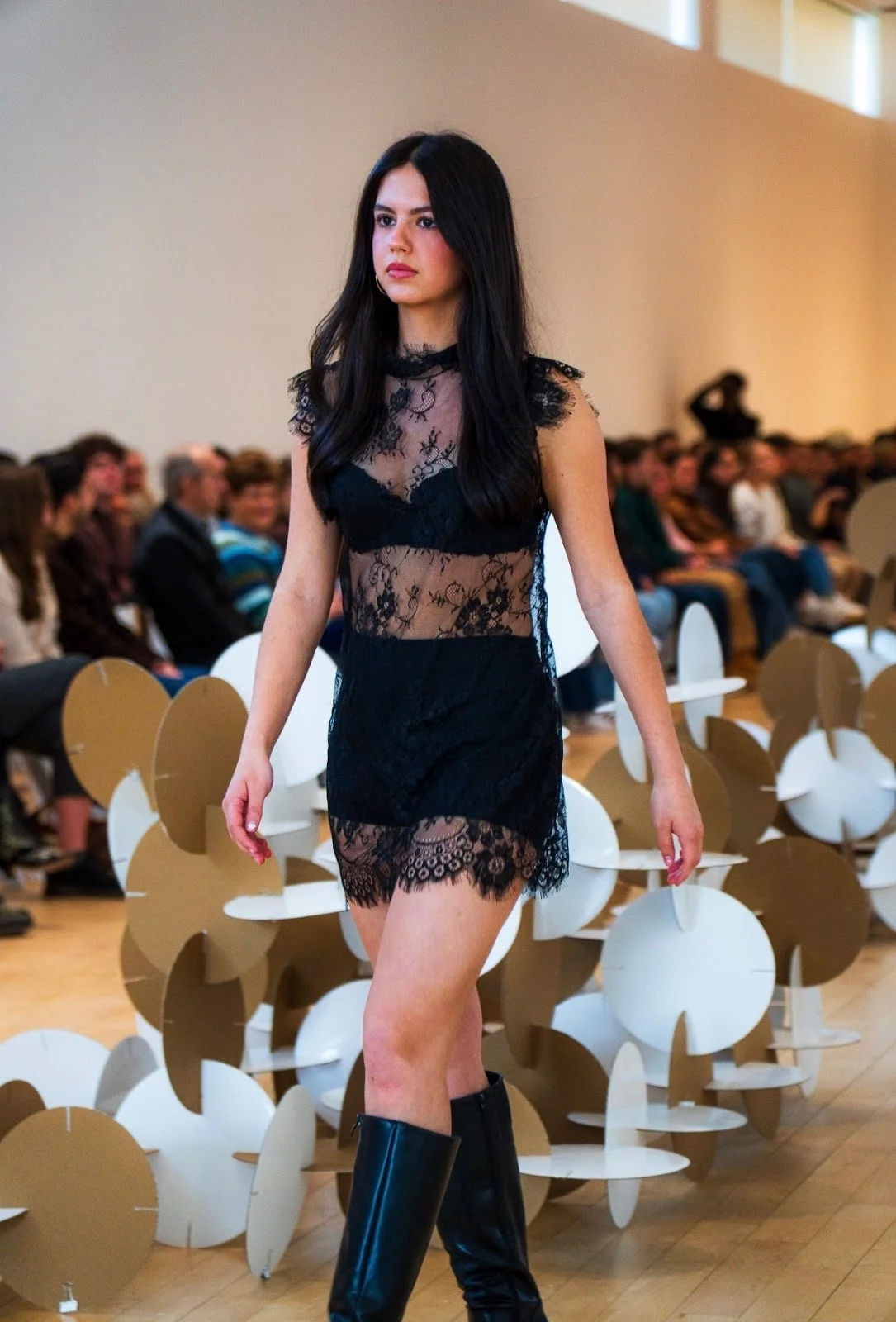
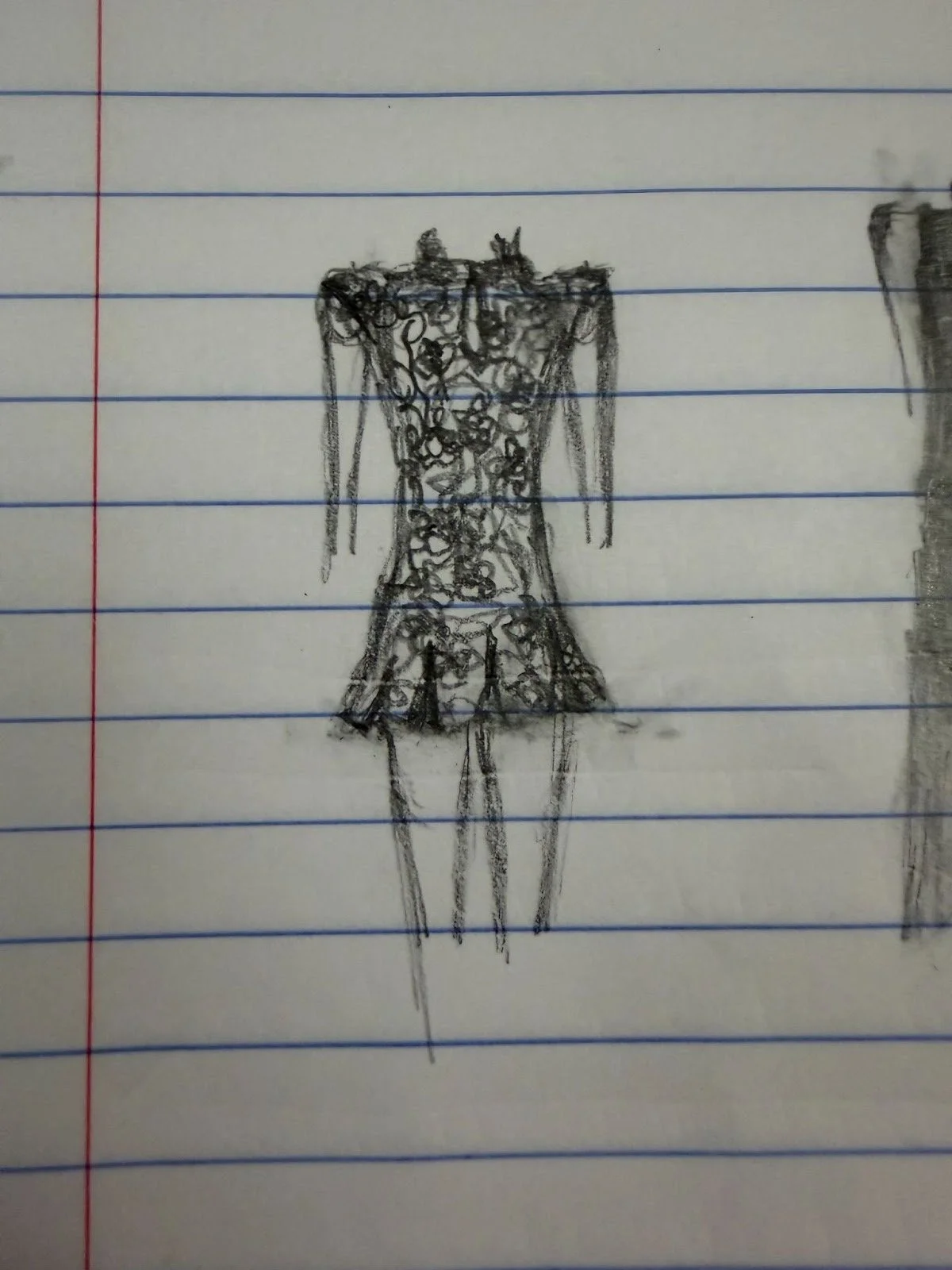
Continuing her series of designs, for “Pressure” Horrigan chose a black lace dress to represent societal pressures on an individual growing up. The dress is significantly more structured, with a higher neckline and tighter fit. The dress is designed with flowers of black lace, which creates an appearance of “the flowers growing on the person, which can represent corruption and pressure from the outside world and the protections we put up against it.” For Horrigan, the dress also represents the pessimistic outlook we can have on the world as we come into it, as well as teenage angst. However, the dress retains a connection to youth, such as the way the dress flares out at the bottom, showing how even as we grow up, we still hold on to our childhood.
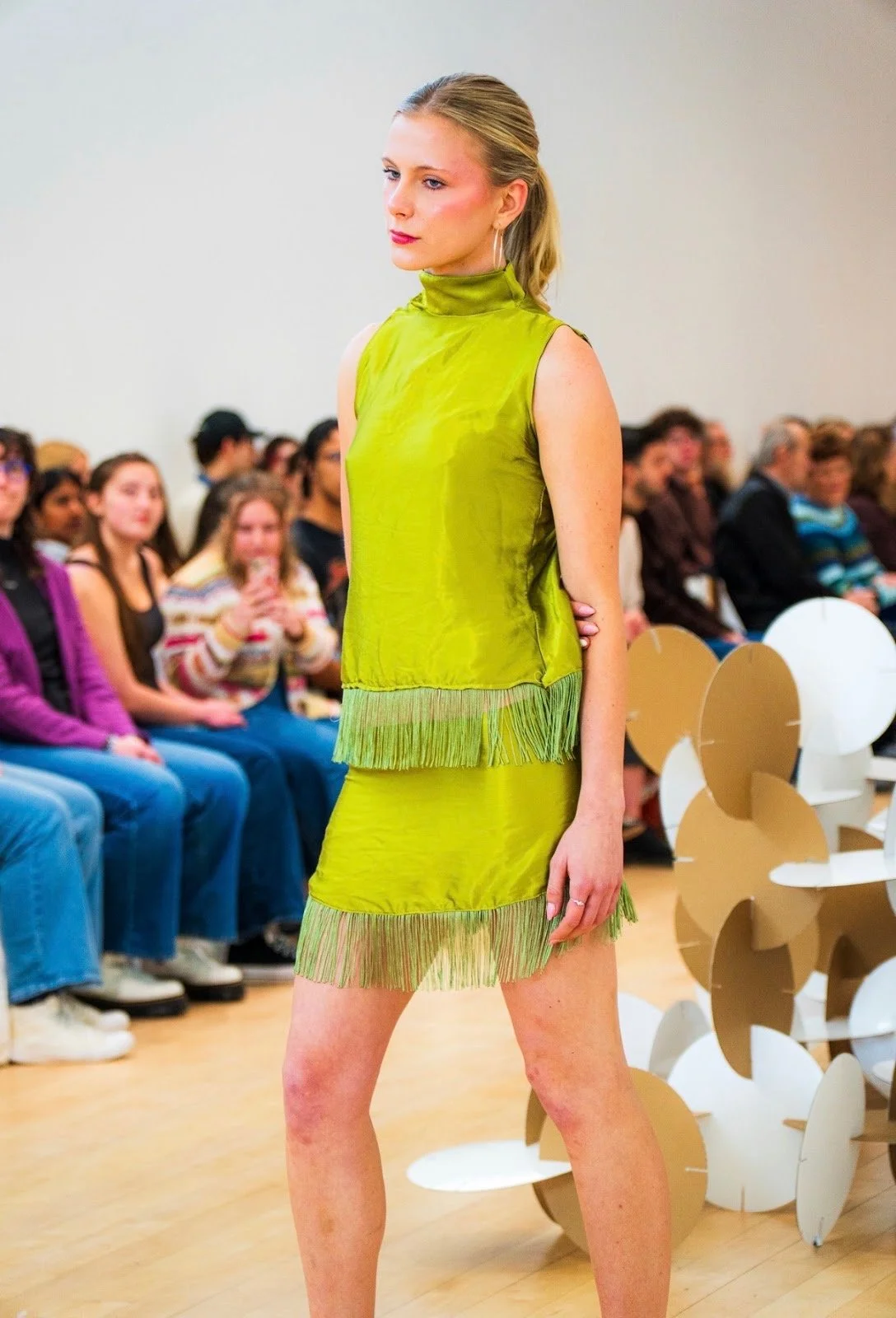
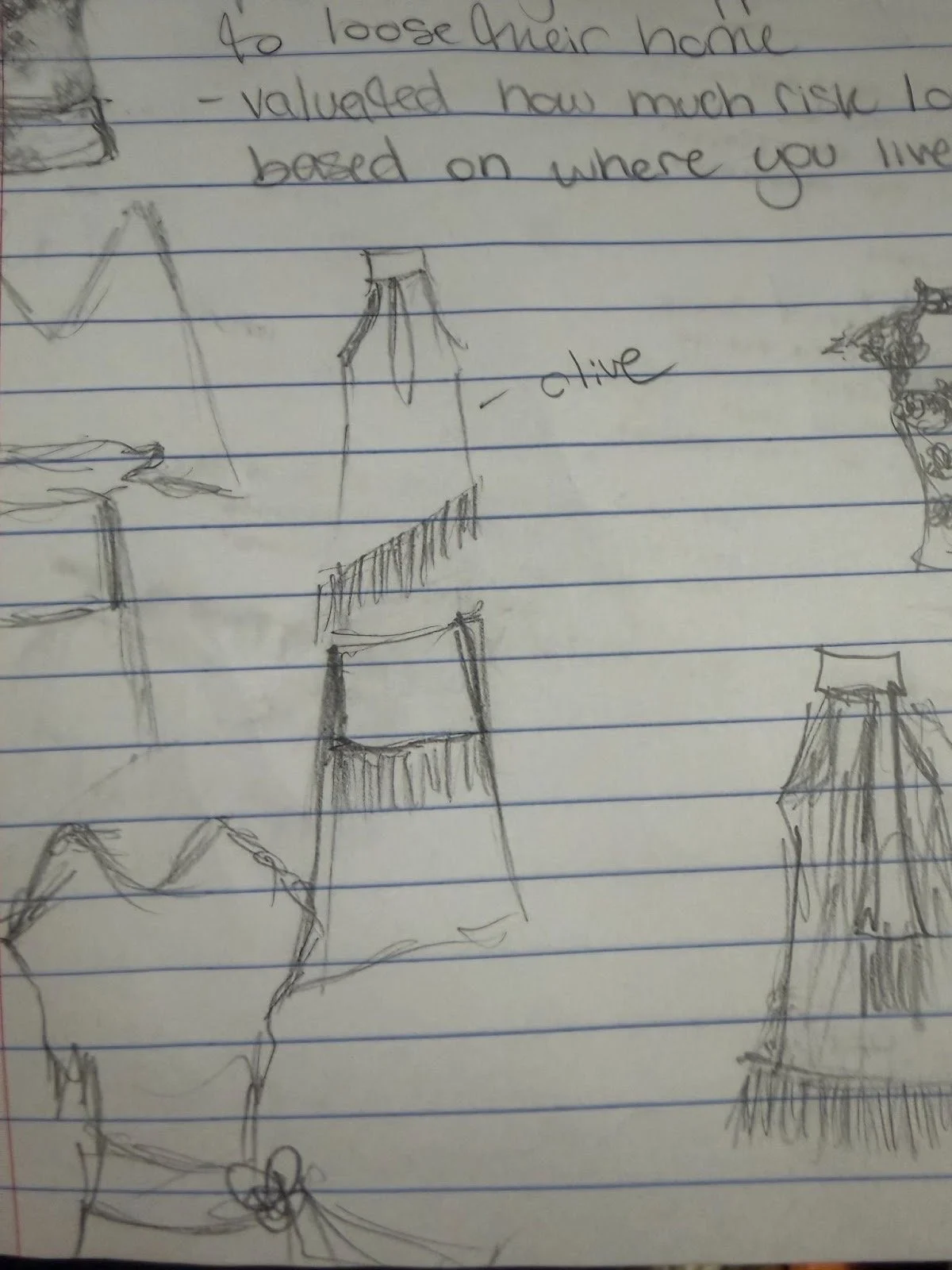
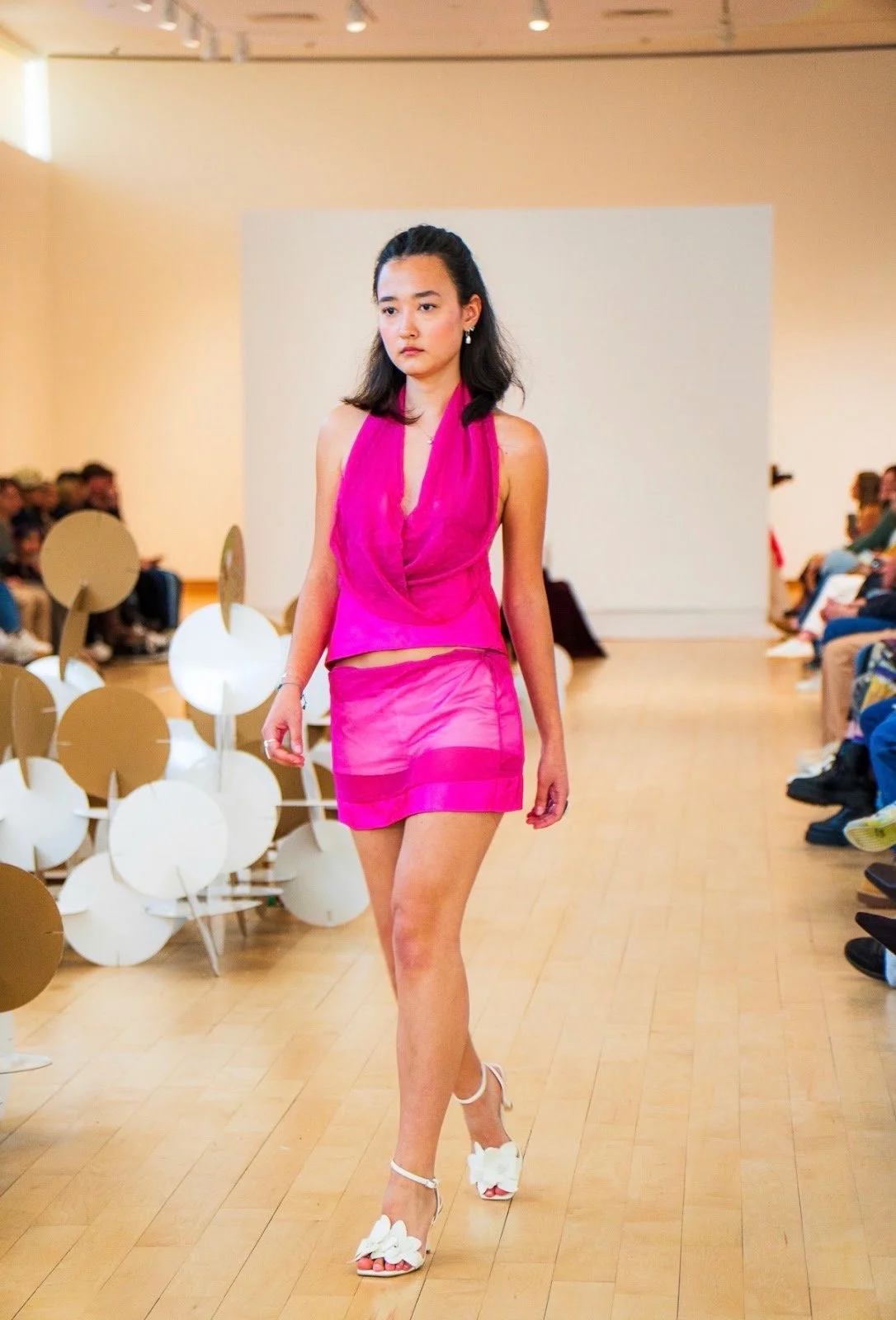
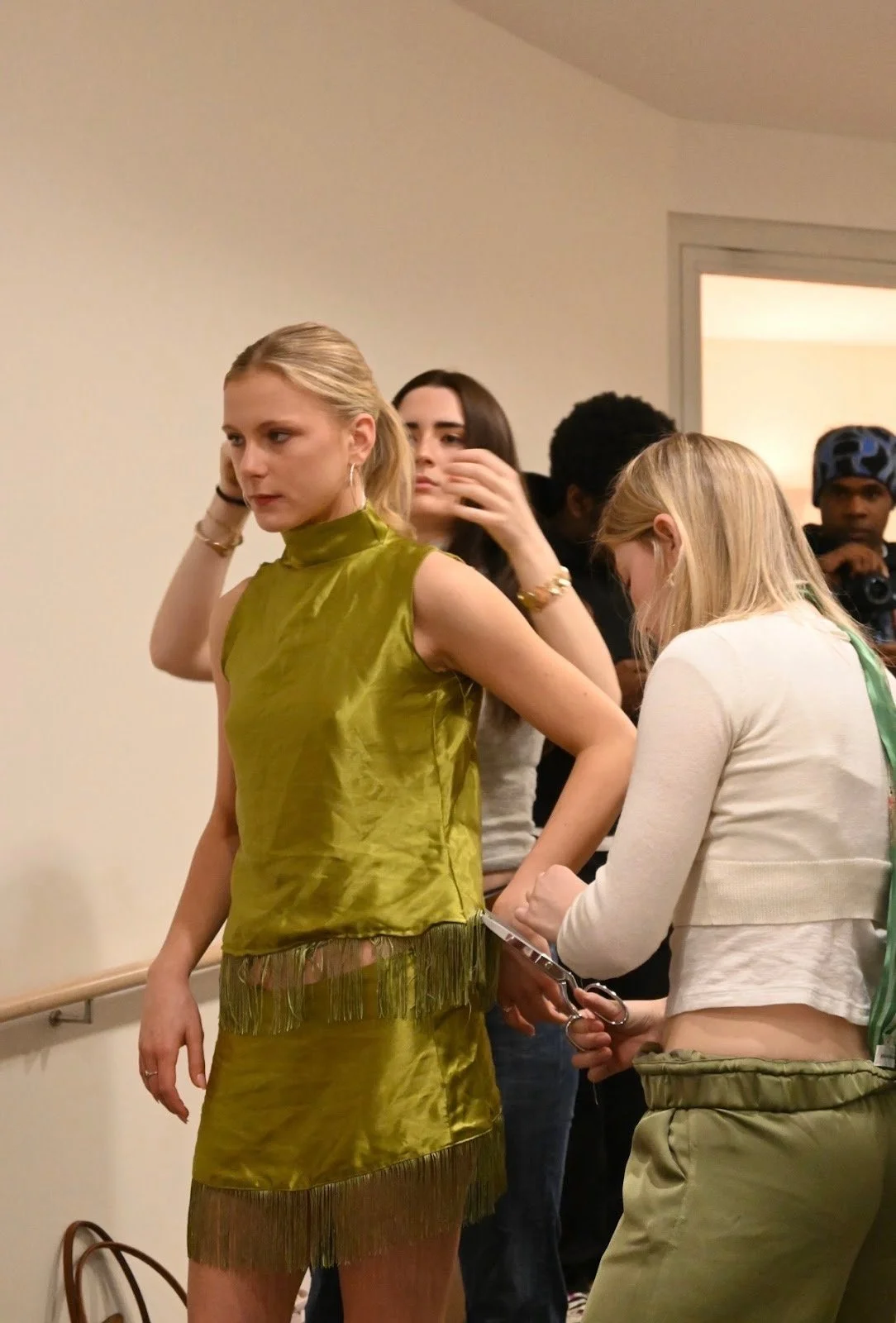
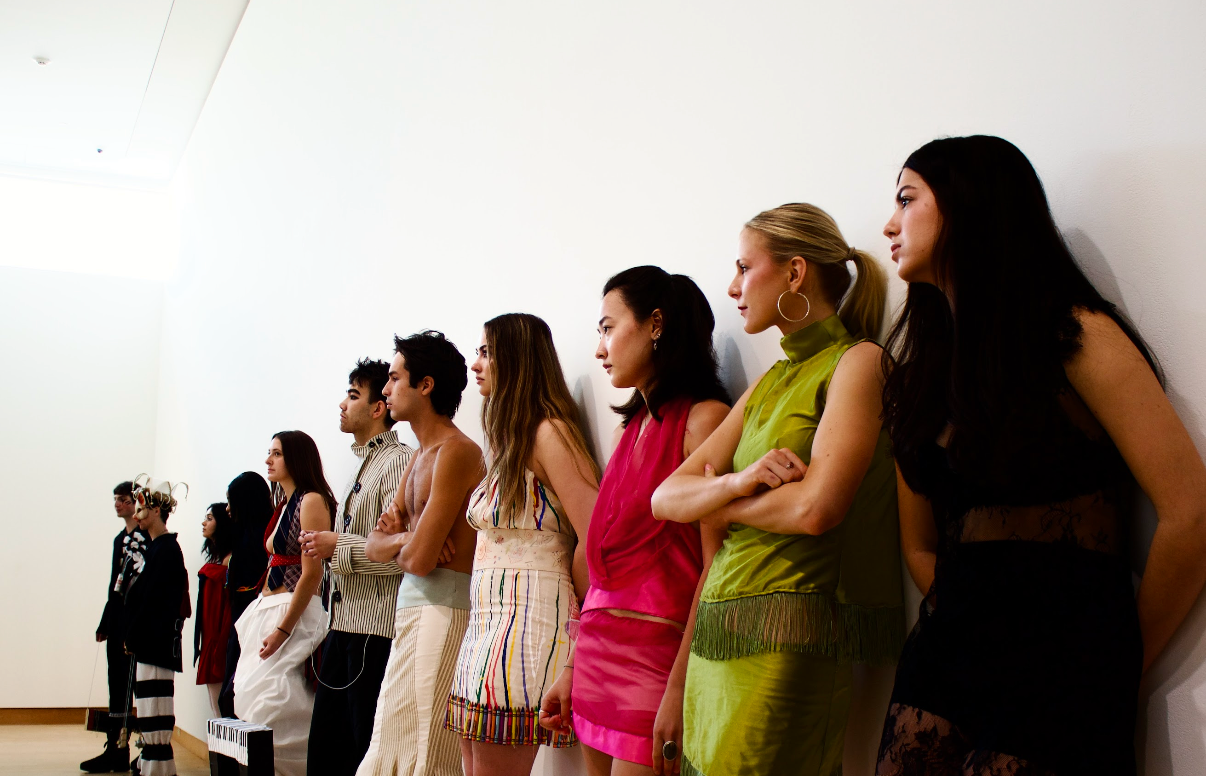
Her third design of the series is for the culminative part of the show, “Becoming” itself. Her design consists of a green skirt and top with a keyline neckline and tassels. The dress retains aspects from the earlier two designs, looking to reflect elements of both youthful play and pressure, to create a visual representation of growth. Stylistic choices such as including the tassels from the first look highlight how as people, we carry our younger selves with us and do everything for the younger version of ourselves. To highlight the act of becoming, Horrigan chose the color green to physically represent growth. The flowers were black, but now the green signals “you’ve sprouted, and grown into a more mature person with a complex view of the world, but someone who can still find the good in life.” Horrigan aims to emphasize that we still are the same person we’ve always been, yet we carry our childhood joy and teenage troubles with us wherever we go. Also for the fourth act, Horrigan created a lovely vibrant pink two-piece set, reflecting back on the childhood whimsy we carry with us.
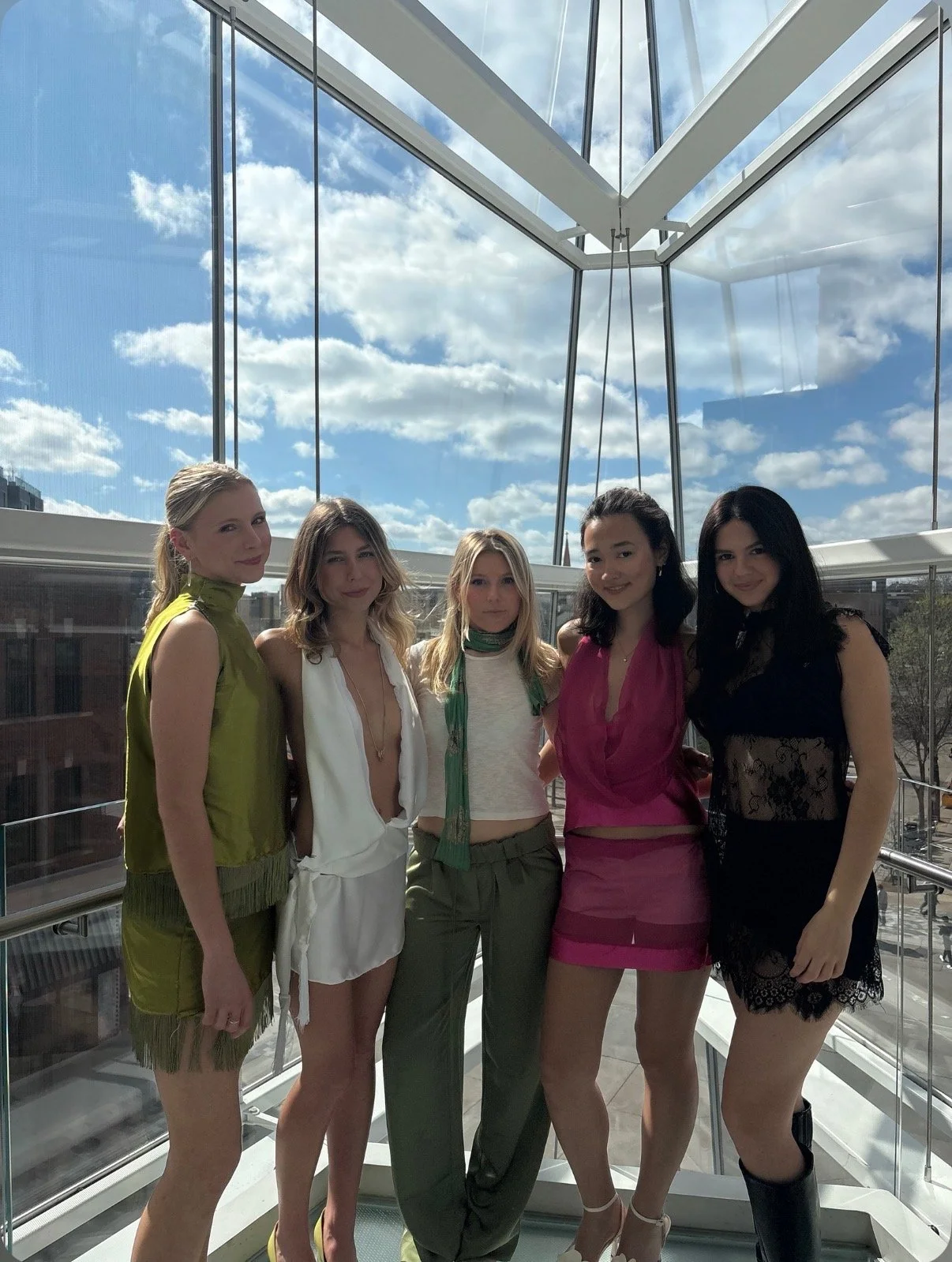
These pieces together manifest the story that Horrigan is looking to tell, a story of evolution, growth, and becoming. Throughout her work, Lucy looks to reflect her own life story, taking inspiration from her own childhood. Growing up, Horrigan says she “wore what made [her] happy, not really caring what other people thought of [her].” As a hockey player, she bent gender norms and didn’t let anyone’s opinion affect her fashion choices. As she grew up, “people started to make comments and say things,” representing the communal experience of pressure. She internalized those thoughts, and describes this second stage of pressure as when she cared the most about people’s opinions and let them impact her fashion choices. The third stage, “Becoming,” is where Horrigan is at now. “I love fashion and design, things that help me express myself,” Horrigan shares. “I wear whatever I want, I can make whatever I want, the clothes I wanted to wear when I was a kid. There’s no limits.”
Becoming is an incredibly personal show that will resound with many. We all experience these three stages of “Play,” “Pressure” and “Becoming” in order to become the best and most authentic versions of ourselves. Lucy Horrigan beautifully represented this journey throughout her four primary pieces for the SW26 show.
Edited by Jordyn Salahiddine-Rose, Leila Ianovici and Safa Razvi