
Inside the Mind of Adidaas Designer Griffin Claes
Written by: Galilea Matus
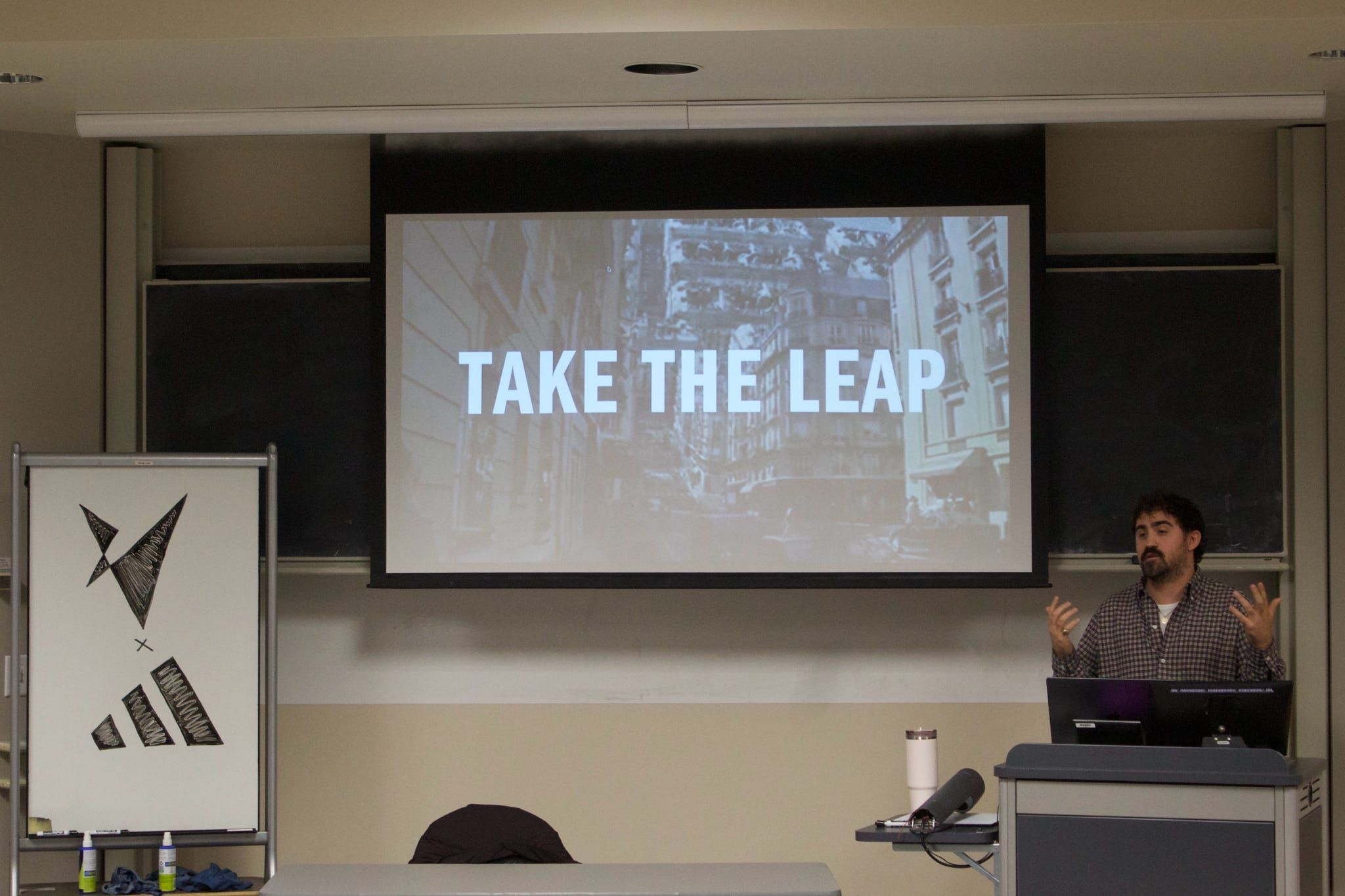
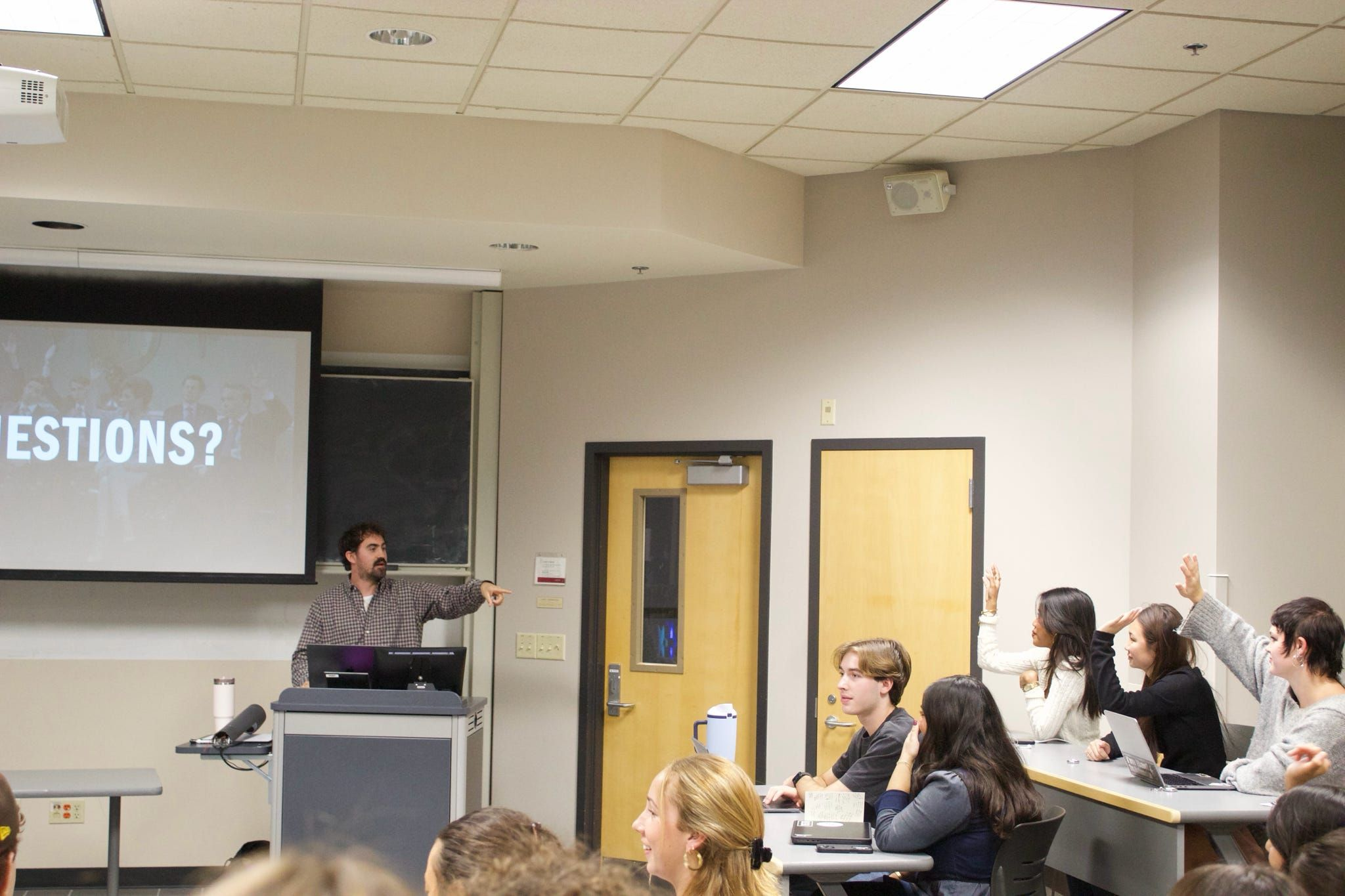
UW–Madison School of Human Ecology alum Griffin Claes has built an impressive portfolio, with stops at Nike, Urban Outfitters, Marvel Studios, and Theory. Today, he serves as a Global Senior Designer for Adidas in Germany. Claes recently returned to campus to speak with students from The Vault on October 20, reflecting on his journey from Badger student to designer for one of the world’s most iconic sportswear brands. Throughout the talk, Claes provided a rare behind-the-scenes look at his creative responsibilities, the lifecycle of his pieces, jerseys, and his core philosophy on career endurance.
Central to Claes’s presentation was the concept of the “lifestyle of a jersey,” a process that is roughly two years from initial spark to retail distribution. Before putting pencil to paper, Claes begins with extensive research: putting himself in club archives, touring stadiums, exploring local museums, and absorbing city culture. The goal is to understand what consumers will be obsessed with two years before a product hits the shelf. Once these themes are laid out, Claes translates his concepts into initial sketches and digital executions. His next hurdle is securing a buy-in from stakeholders, a step that requires equal parts design strategy and narrative performance. Reflecting on his experiences, Claes painted a picture: “Imagine this room filled with a bunch of Italians in suits, speaking all kinds of Italian, crazy, very chaotic. And you step in there, and then it becomes dead silent… Your job is to bring them on board. You're telling that story now. Not only do you have to craft that story, now you have to sell them on that dream.”
When a pitch succeeds, the project moves into what Claes calls “everything underneath the surface of the iceberg.” This stage involves building tech packs and aligning with material developers to ensure details are translated accurately across every sewing machine on the factory floor. The payoff comes when the final design enters the global landscape, appearing in video games, street corners in Tokyo and Miami, and being worn by fans worldwide. For Claes, seeing the final product in the wild is insanely rewarding: “It’s kind of dreamy. These are the kinds of things that you picture yourself doing. It's the big payoff, these things are sports history. All of these fans, this is what I do it for. But also, too, I do it for my younger self.”

On top of execution, Claes puts a heavy emphasis on authentic, deeply researched storytelling. To the untrained eye, a soccer jersey might look straightforward, but Claes approaches design as an opportunity to create subtle narrative “easter eggs” directly into the fabric. During his talk, he highlighted a kit developed for Italian icon Juventus and club legend Alessandro Del Piero. Pointing out the depths in the fabric, Claes explained, “I love an Easter egg. His nickname was Pinteri Gill, because he played like a painter. So the idea was to build a fake museum on the shirt.” That was the idea. So, that's him as a, you know… and his tongue is out because that was his signature, his signature celebration. Those lightning bolts were done because his father was an electrician. And that's what started him out. And his father paid for him to get everywhere and everything. He was very thankful for that. So these are little things that you can do so that they feel like it's theirs…Now, you said the Italian flag, which is true, but also too, Juventus is black and white stripes… But if you only show three of those, you get both.” These subtle design details turn a standard athletic garment into a canvas of history and personal meaning, bringing back that connection between the athlete, the club, and the supporters Claes spoke of.
In addition to sharing industry insights, Claes offered practical advice for students preparing to launch their own careers. Central to his message was the concept of “re-dreaming.” While securing a global role at Adidas marked the fulfillment of a milestone he had for years, Claes emphasized that achieving a major goal is simply the cue to imagine the next one. Claes encouraged students to view their aspirations as living things that require constant effort, curiosity, and care: “Redream, redream, redream. It doesn’t have to be one thing. Surround yourself with things that you really love, and it will reveal itself…you just nurture that tree, right? If the dream is sitting there, and you don’t do anything about it, it’s just gonna sit there. If you nurture that, if you feed that dream, if you water that dream, it’s gonna give you something really good.”
Edited by Jordyn Salahiddine-Rose and Leila Ianovici